Showing posts with label history. Show all posts

Monday, 30 January 2017

Maltese Military Funeral for Isabella’s colleague, Dr Isobel Tate


On 28th January 1917 Isobel Tate died. She was one of the small group of women doctors who, like Isabella Stenhouse, had signed up to work with the Royal Army Medical Corps in the summer of 1916. On January 30th, she was buried in Pieta Cemetery, alongside men who had died from wounds sustained in Gallipoli or infections caught in Salonika. 


This extract from The Mystery of Isabella and the String of Beads tells of my visit to the cemetery:


It is a burning hot Maltese day as I turn away from the vehicles hurtling along the dual-carriageway outside Valletta into a peaceful Pieta side street and go through an iron gateway. The thick stone walls instantly dull the roar of the traffic. I can hear insects, and even in the midday glare I can see that this war cemetery is unlike any I saw in France. Cypresses stand sentinel over a field of flat tombstones that lie between hard baked paths: their dates 1915, 1916, 1917, 1918. This is where the soldiers who the hospitals fail to mend lie buried. Many of the stones bear three names. The Maltese ground is so hard that the army has had no choice but to let the flood of dead share one another’s graves. They have had no choice but to lay many of the tombstones flat, as if to greet the sun. If I took the time to count, I would find 1,303 victims. That is almost one every day from the start of the campaign in Gallipoli in 1915 until the signing of the Armistice in 1918. But I do not count them. Instead, I turn back towards the gate, letting time and the weather slip to the winter cloudiness of Tuesday 30th January 1917 and an article in the Daily Malta Chronicle.


As I wait, I thread together the information I have gleaned about this last month, January 1917. Many of the churches started this third New Year of the war with a week of special prayers, but the German U-boats did not stop. Instead, they sank four merchant ships passing near Malta before the month was even nine days old. Not that there were many casualties, but tons of sugar, barley and other grains were lost. From home, tales of women and children queueing for hours in the winter cold and wet for basic supplies of bread and meat have been coming in from every quarter. The letter-writers try to put on a brave face, but the envelopes spill stories of supplies running out and shopkeepers having to come to the door to dismiss the queue. They tell of the weary families, frozen to the marrow, trudging home empty-handed, wondering how they will survive. Rumours abound too of discontented murmurings among the soldiers on leave, furious that while they have been risking everything for the sake of their nation, their nation has not looked after the women and children they have entrusted to its care. And the British in Malta have agreed that although they may be bored of canned meat, canned fish and the everlasting condensed milk, for now they are having the best of things.


My thoughts are interrupted by music. It is a quarter to four. Other people have joined me – a few nurses, some orderlies and a little crowd of men in hospital blue. Quiet, we crane to see. In front of the band marches a cluster of uniformed men who I know from the Chronicle are members of the Royal Garrison Artillery. They pass so slowly that I can count them, forty in all, pacing solemnly to music so sad that it alone makes my eyes moisten. As the last row of the artillery passes, the band itself comes into view. Eyes front, the Band of the Royal Malta Artillery is setting the rhythm for the whole procession, the dignified tones of the Dead March from Handel’s Saul resounding from their instruments; swinging from their drums, black crepe. Solemn minutes tick by before the coffin comes into view, and every hat around me is doffed, every head bowed. Lying on a gun-carriage pulled by six mules, the coffin is escorted by privates, lieutenants, captains and colonels, each bearing an elaborate wreath. Just beside me at the gate, the cortège halts, and the band falls silent. The Union Flag draped over the coffin moves eerily in the January breeze.

Hundreds of funeral processions may have come along this road in the last two years, but this one is different. It is no soldier who lies inside that coffin. It is one of the lady doctors, Dr Isobel Addy Tate. Respectfully, her coffin is lifted gently from its carriage and placed on the pall-bearers’ shoulders. Even their names make the Chronicle, so detailed is its account. The priest is leading them into the cemetery, but I wait, watching the crowds who have followed Dr Tate. There are numerous Medical Officers with their RAMC badges. A cluster of civil surgeons, and a throng of Matrons, Sisters and Staff nurses pass before, at last, the group I have been waiting for comes into sight. Instantly recognisable by their motley garb, I slide in with the lady doctors. Slowly, we process towards the grave. The place is packed. Every path is full, and the grave is awkwardly near a wall, but the men are moving back to allow these women, Isobel Tate’s closest friends and colleagues, to be the nearest to her burial.


As the priest conducts the service, the two neighbouring tombstones catch my eye. These are not shared tombs, each grave holds the remains of a nurse. Only one space remains in the row, and I shudder. At the rate this war is going, it too will probably soon be filled. Somebody who is now living and working, maybe even one of these women standing near me now, will be lying in a coffin for an interment as ceremonial and certain as Dr Tate’s today.

The priest finishes the ritual and the artillery men raise their guns. Three sharp volleys snap the silence and the tear-jerking strains of the Last Post echo from a single trumpet. I bow my head and wait while the lady doctors file past the still open grave. Then solemnly and quietly, they leave the cemetery. Does their conversation slowly come back as they walk towards Porte des Bombes?

“So sad.”

“So far away from home.”

“How did she die?”

“Congestion of the brain associated with typhoid, they suspect.”

“She had taken over the bacteriology in Valletta Hospital, hadn’t she?”

“Yes, and she was ill in Belgrade when she was out there last year, I believe.”

“She deserves recognition from the authorities.”

“Yes, she has given her life for her country just as surely as any wounded soldier or victim of malaria.”


(Excerpt from The Mystery of Isabella and the String of Beads,
Copyright Katrina Kirkwood 2016.)

Friday, 12 August 2016

#OTD 100 years ago: Which women doctors did the army take on?

Thanks to Col. Walter Bonnici’s hard work, I know that on 12th August 1916, Dr Isabella Stenhouse left Southampton on board the HMHS Gloucester Castle. 


Gloucester Castle before decoration in its hospital ship regalia.

She and fifteen other women doctors were joining 22 of their colleagues. Together, they formed the first cohort of women doctors that the British Army had ever dared to recruit. Not that the army was taking the risk of sending them to help with the flood of wounded from the battle raging in the Somme. Oh, no. Rather than let these ‘ladies’ anywhere near the fighting, the army was shipping them to Malta, far away in the Mediterranean.

It was not that these women were inexperienced. 

Isabella had spent 1915 working in France - that story is told in the book.

Georgina Davidson, too, had served with the French Red Cross but, when that job had finished, she had travelled to Serbia to join Elsie Inglis and the Scottish Women’s Hospitals.

Florence Bignold had also worked in Serbia.

Recently qualified Martha Stewart had been forced to retreat from advancing enemy troops while running a surgery for Mrs St Clair Stobart’s Serbian Relief Fund. By way of thanks, the King of the Serbs, Croats and Slovenes had awarded her the Order of St Sava. 

And, as if to cap them all, New Zealander Ada McLaren had spent three full months as a prisoner of the Austrians after being captured while working with the Berry Mission, again in Serbia.

Yet these experiences had deterred none of them from boarding the Gloucester Castle. On this day 100 years ago, they set off for war again. 

Their companions were no less bold: Mabel Hector had worked in India; Elizabeth Moffett was an active suffragist who, on occasion, had refused to pay her taxes, while Katherine Waring was so confident of her abilities that she had signed up only 6 months after qualifying. 

As the ship slipped out of port and headed towards the Bay of Biscay, what was going to happen next?

Wednesday, 13 July 2016

The 100 Year Women's War


'Concern had centred on whether women had the physical capability to withstand the demands on their body that some of the roles will require.'

When I read these words last Friday, I was engulfed by a feeling of déjà vu. I had come across this argument time and again during my research. It was, for example, one of the ways in which adults tried to dissuade Edwardian girls from training as doctors. 


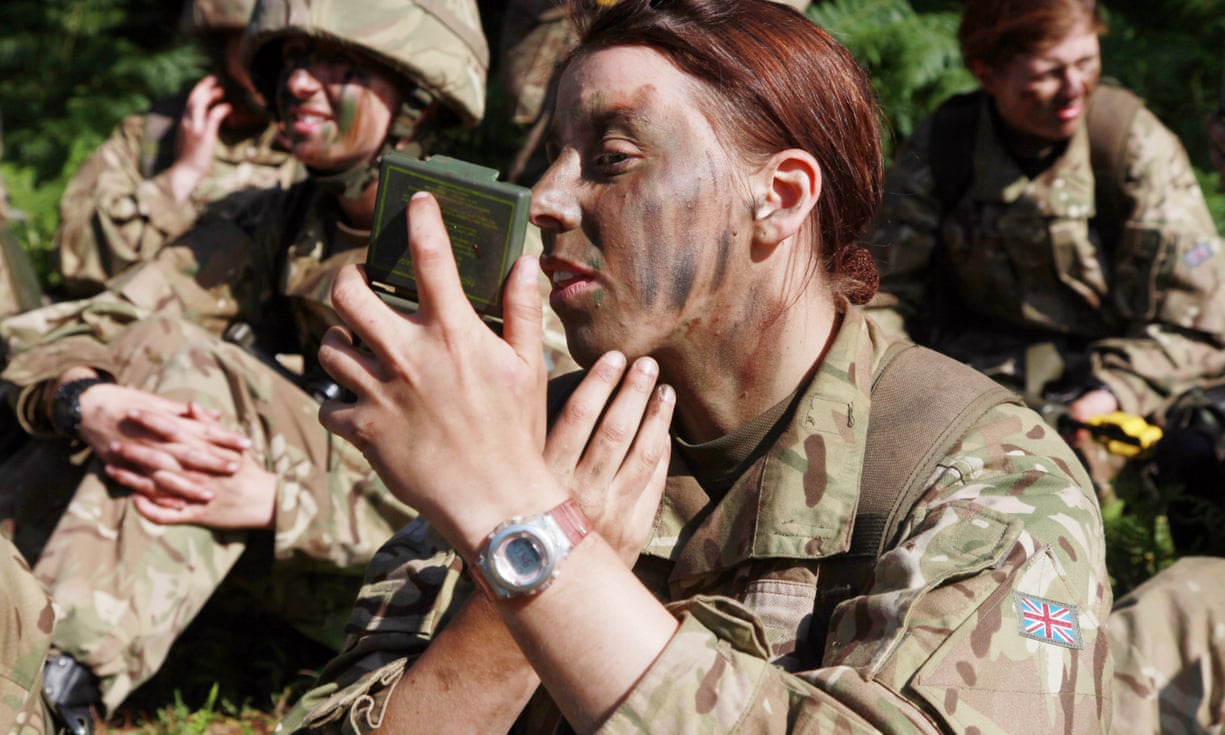
But the incarnation I was reading did not come from the Times of 1905. It was live on the BBC website - and not as history, but as news. It related to the government's recent decision to allow women to serve in close combat roles in the British military. 

Now I am no military expert and couldn’t begin to make judgements about this particular case, but I found the parallels fascinating. When I read that: 'Young men and women  will inevitably form relationships and personal issues will disrupt the dynamics of units'I was back with Vera Brittain in her VAD uniform, watching the restrictions that the terrified authorities were placing on volunteer nurses to ‘ensure’ that romance had no chance.


Trawling the internet, I read how: 


It was a similar anxiety that made the authorities send Dr Isabella Stenhouse and her colleagues, the first women doctors they had ever employed, to Malta. They regarded it as much safer than letting them anywhere near the front line in France.


I read on, and guess what? The rule change comes amid reports of a recruitment crisis and undermanned army reserves.’ Why, undermanning was exactly the problem that faced the army medical services in 1916 - the problem that led them to risk recruiting Dr Stenhouse and her colleagues. 

One compensation is that, a century on: 


I just hope that these new combat-ready women will not suffer the indignities that were imposed on their pioneering military ancestors, the women doctors who signed up with the army this month 100 years ago.

Tuesday, 5 July 2016

Why July 1916 was an important month for women doctors

Courtesy of Sarah Wilkin from Oxford University's WW1 Centenary blog you can discover why July 1916 was an important month for professional women here:

WW1 Centenary: Continuations and Beginnings

Sarah kindly invited me to submit a post related to my research on Dr Isabella Stenhouse. I was thrilled when she posted it last Friday, the centenary of the start of the Battle of the Somme.

The Somme was, and is, such a huge event that it overshadows everything else that happened that July one hundred years ago. But for Isabella, July 1916 had another meaning - the 24th was the day she signed up with the Army.

From the start of the war, the Army had refused to employ women doctors but, by that July, the desperate needs of the wounded had broken their resolve and they asked medical women to help them. Isabella was one of the first to sign up.


Wednesday, 5 November 2014

Isabella guesting in Beyond the Trenches Blog

The mystery of Dr Isabella Stenhouse and her beads is gradually being unravelled, and, slowly, the story is being penned - well, typed.


In the meantime, Alex Pryce at the AHRC kindly invited me to write a post for their blog, so for a taster, head to Beyond the Trenches.

And if you want to find out more about WW1 and the people who nursed tens of thousands of sick and wounded men in WW1 Malta, head to Walter Bonnici's incredibly useful website

Wednesday, 3 April 2013

Styles of the times

I'm looking into the style of images in the Edwardian period and the War - what ticked people's boxes, what were their skills? What resources did they have to hand?

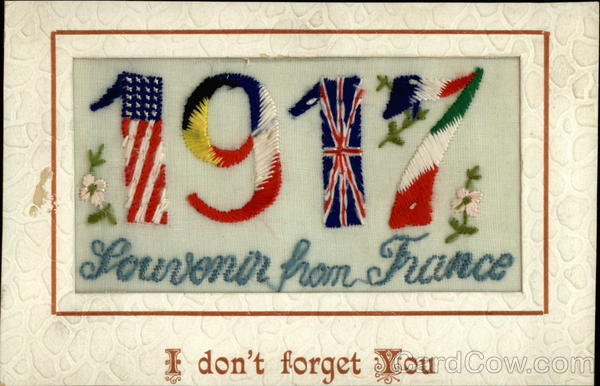
Embroidered postcards during the war mainly featured flowers, flags and medals with the odd animal thrown in for luck.


Occasionally quite funky, symbolic text appears:

Soldiers would not have been able to make these, even with time on their hands waiting in trenches or hospitals.

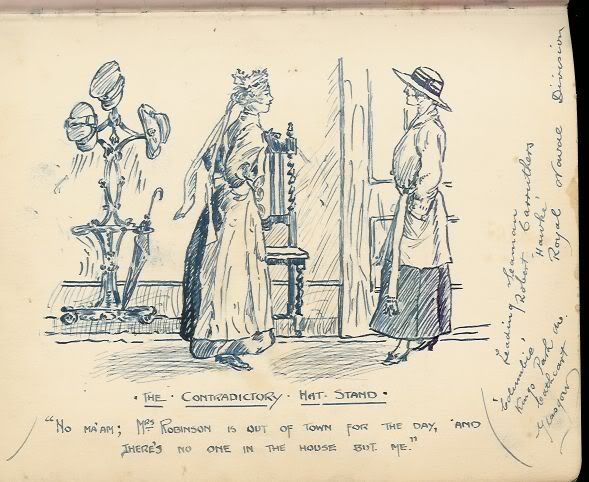
But there's an album online of images scanned from a book kept by one of the women who graduated with Isabella, Celia McNeill. http://s143.photobucket.com/user/quartz-quill/library/WW1?page=1 
It's full of drawings, paintings and poems done by the wounded men she was treating. 


The standard of the painting varies:


as does the literacy level of the men:


But it amazes me that they possessed any of the skills to draw or paint. It challenges my stereotype of men in the war as much as Isabella does with her doctoring.


Wednesday, 11 July 2012

Woman and Labour - Project Gutenberg

As I've said before, I'll read anything tangential to Isabella's story to get a feel for the times in which she lived. She kept no diary and left no letters, so I've been looking at what other people of the time wrote for insight.

There's a great project digitising and making downloadable versions of books that are out of copyright in the USA, Project Gutenberg. There are many fascinating books from the early years of the twentieth century freely available that would have taken days of hunting in inaccessible libraries to find before Gutenberg.

One I've been reading is by a South African, Olive Schreiner.


'Woman and Labour' is her re-write of a much researched book that was destroyed, I think, during fighting in the Boer War. I'd never have thought I'd enjoy reading an ancient feminist argument, but it's wonderful.

Isabella's story is only unusual because she was a woman. She was one of the first women to follow the trail hacked out by women of a slightly earlier generation. Women's emancipation - just like slaves - was a hot topic, and Olive explains her thinking on the topic, and that is what excites me in her book.

Here's a group of women who are still campaigning, re-enacting the costumes of the suffrage campaigners of 1911, such as Isabella would have seen. Although maybe the campaign is more fun.