Wednesday, 5 November 2014

Isabella guesting in Beyond the Trenches Blog

The mystery of Dr Isabella Stenhouse and her beads is gradually being unravelled, and, slowly, the story is being penned - well, typed.


In the meantime, Alex Pryce at the AHRC kindly invited me to write a post for their blog, so for a taster, head to Beyond the Trenches.

And if you want to find out more about WW1 and the people who nursed tens of thousands of sick and wounded men in WW1 Malta, head to Walter Bonnici's incredibly useful website. 

Saturday, 2 August 2014

Isabella gets her mention this centenary weekend

I'm really glad that this weekend the Telegraph has decided to feature Isabella on the Flashback page of their Saturday magazine.


It feels as if she has been given her small place in the battery of commemorations taking place this weekend, a century after WW1 began.

She also features in Paul Atterbury's BBC Antiques Roadshow book, World War One in 100 Family Treasures, that will be published on 7th August.


Of course, there's much more of the story to tell, so here's hoping for a way to get the full story out soon…….

Monday, 30 June 2014

Isabella at the Blaenavon Front

On Saturday, courtesy of Breaking Barriers Community Arts, Isabella was invited to give the people of Blaenavon a chance to contribute a strand of 'DNA' to the commemorative work that began at Made in Spring last year.


She stood in the shelter of a fake WW1 dug-out at Blaenavon Heritage Day, beads beside her and a table nearby where the townsfolk could decorate beads and add them to the growing strand of 'DNA'. 


All went well until the rain leaked through the awning……but, with the help of 44 bead decorators, the strand was completed.


Thursday, 10 April 2014

Isabella in the news


It's been a busy week for Isabella. Her Antiques Roadshow appearance caught the imagination of some of the press.

Wales on Sunday published an article which had some truth in it - but only some!

The Daily Express managed to be more accurate, and ITV Wales came to film her medical equipment and string of beads ready for their centenary commemorations in August.

After that, this photograph of Isabella working with the British Army in Malta was favourited and retweeted on Twitter.


Thursday, 3 April 2014

Isabella is in the Radio Times

Imagine my shock. A quick browse of next week's Radio Times to see if there are any treats in store, and there is Isabella's name in the Choice Section!


BBC 1, Antiques Roadshow, Sunday 6th April, 8pm.

Wednesday, 26 March 2014

Isabella on Antiques Roadshow, 6th April

I was annoyed, so I typed a quick email:

'WW1 was not just about France and the trenches, and it was not just about men. I own the medical instruments of a woman who served as a doctor in France, Malta and Egypt during the war.'

It was Spring 2013, and the Antiques Roadshow had just asked for ideas for their WW1 centenary episodes, a letter from the trenches or a medal, they suggested.

A phone call later, and I was being interviewed by the producer. They wanted photos. They put Isabella on the shortlist and, asked, "Nothing definite, but would you be free to take the instruments to France in late July?"

Would I be free? Of course I would.

So we went, and Isabella's instruments will be discussed in the 6th April episode of Antiques Roadshow.


Monday, 3 February 2014

Update

Lack of posts on the blog doesn't mean I've stopped working on Isabella - Oh No. I've been working on her story harder than ever since the Arts Council Funding ended in June.

First of all I went travelling. I drank coffee on the site of the hospital in France where Isabella worked.


Over the last few years, I've spent days in the Imperial War Museum, painfully decoding the diary of the hospital. The dip-penned, candle-light scrawled words have been hard to untangle. In their antique Edwardian script, they haven't always made sense. I've kept wondering if I've understood them aright. Visiting the place cleared that all up, made sense of both the writing and Isabella's tale.

I found old photos which showed me what the building used to look like, and I scoured the town for spots Isabella would have known.


I flew to Malta and was overwhelmed by the friendly interest shown by people in Isabella's story, a part of their island's story they knew little about. I was able to walk in the rooms where she had tended patients, and to stand on the steps where she had paused from her work to gaze down at the sea. I wondered what she had been in her mind as she sat in the very same spot.


It's been a satisfying adventure, but I haven't visited Egypt yet. I'm a bit scared of Egypt. Any suggestions?

On my return, I began to write up three years (on and off) of research. I'm halfway through. Halfway through my attempt to tell Isabella's tale in a way that's interesting and fun yet historically accurate.

But I'm wondering when I should tell people what I am doing; I'm busy panicking that I've missed the centenary of WW1 because all the commemorations have begun so early, and I'm wondering if all my work will prove to have been in vain.

But even if I am too late, I am still convinced that the story of a woman who served as a doctor during WW1 is worth telling. She was not a famous woman, she was just a junior doctor, but without juniors, how would people become seniors? Without people to test the waters of working in a male dominated environment, to begin to let men see what they could do, how could men begin to realise what women could do, and how could anyone else follow?


PS: Why have I paused working towards an installation? Because to get the funding to make an installation, I knew I would need to work out exactly what I wanted and what it would cost. But to do that, I had to collate everything I'd discovered about Isabella and her beads. And once I began doing that, I quickly found there was far too much to limit her story to an installation. An installation or something else can follow later. Let's hope!

Wednesday, 29 May 2013

Isabella, a detective story told in an installation for schools and galleries

As a result of the research grant from the Arts Council of Wales, I am looking for expressions of interest from galleries, museums, schools, libraries,  communities, festivals or anywhere else, in hosting the installation 'Isabella and the String of Beads'.


Here's the background: 


In the 1890s there were four sisters, who, like many other girls of their day, were brought up to sew fine seams and prepare for marriage to a suitable man.


But the oldest, Isabella, grew restless and fought her way into studying medicine.
She had just qualified as a doctor when war came in 1914.
Leaving home, she travelled many miles and to mend wounded men instead of garments.

Unravelling the tale of what happened as she travelled has been like a detective story. She left no personal papers or diaries. Only her medical instruments and a string of beads tell of her war experience, but the words of others give clues as to how she might have thought and reacted, words both from writings of the time and from interviews with living women whose lives parallel Isabella’s in unexpected ways. 

Isabella’s story will be told through a clue-filled installation that aims to give the viewer some of the delight of detection and discovery that the research has provided. 


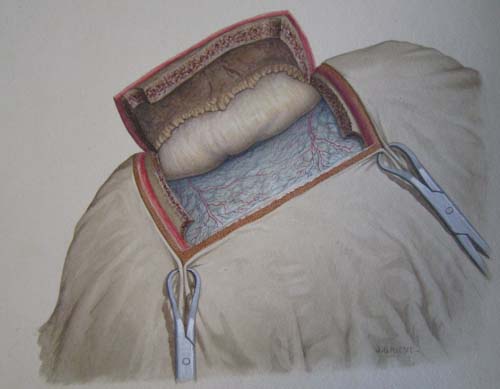
Alongside her original instruments, her story will be revealed through a life-sized replica of her uniform, a freshly-constructed sampler, a dissected 1910 anatomy text book, short films and lighting effects.

Isabella's story represents the story of many feisty women, so to make it accessible to a range of people, there will also be a portable version of the installation that can visit schools, libraries and community venues. Workshops will also be available to enhance engagement.

Please contact me via the contact form for further details and discussion.


Monday, 6 May 2013

Isabella visits Made in Spring

Made in Spring is a one day arts festival in Roath, Cardiff; a warm-up act for the big Made in Roath festival that has taken place each October for the last few years.

Yesterday, Isabella and the String of Beads had a stall there:


Passers-by were invited to decorate one bead each. They then threaded their bead onto a communal strand of 'DNA' to commemorate the legacy of women such as Isabella who went against the flow of their times to alter what is colloquially known as the DNA of our culture. 


People drew, wrote, stitched and stuck until there were 44 beads on the strand and it was ready to be twisted into double helix of 'DNA'.


Friday, 26 April 2013

London

Courtesy of the Arts Council, I've been able to come up to London and see what I can find in the many archives, museums and galleries here. I've been looking for anything that will inspire presentation and help me to get into the spirit and aesthetic of the period.


Here are some highlights:


The Museum of Childhood in Bethnal Green had magic lanterns, a popular entertainment when Isabella was a girl. There was no TV and films were only in embryonic form by the time she was a teenager. There were no laptops or computer games, and for a girl, no Facebook, only posting letters and wiring telegrams. No plastic, so toys and games would have been made of wood, card, paper or metal.

In Tate Britain there was a 1900 portrait of a young Edwardian lady by Sir William Orpen.


It helps me, because it is hard to work out what colours clothes and rooms would have been from black and white photos.

The contrast with his war painting of 1918 shows something of the change people would have had to cope with.


From 1914, Edward Reginald Frampton painted the anguish of a young French couple as the young man went off to war:


A visit to the Army Medical Services Museum in Keogh Barracks gave me a lot of information about the way the army has cared for the wounded over the centuries. I hadn't realised such care had a very long history.

The Hunterian Museum had some powerful images of war wounds, as well as Joseph Lister's dissecting kit, which was almost identical to Isabella's. The Foundling Museum told poignant stories of children whom their mothers had had to abandon.


In the Wellcome Collection there was a magnificently gruesome installation about the potential use of insects as food.


I was unexpectedly moved by the Souzou exhibtion of Japanese Outsider Art


Satoshi Murita's embroidery on a blanket took my eye and reminded me of the sheer physicality of the sickness Isabella would have had to face. Blankets, sheets, bandages, smells, disinfectants, pus......


In their Medicine Now exhibition, a range of artists had created installations that explored different aspects of modern medicine. 

Cultural DNA


The difference between these artistically directed pieces and the historical and precisely accurate displays in the previous museums I'd visited was palpable. Each have their place, and that is one of the choices I will need to make in relating Isabella's story.

One artist had had a necklace created from the sequencing of his DNA. That linked in well with two of the concepts at the back of my mind in doing this project - legacy, and beads. 

What consequences did Isabella's actions have for future generations? The knowledge that geneticists call a particular electron-microscopic view of DNA 'beads on a string' still haunts me. In the broader sense, what legacy did the deeds of feisty women of Isabella's generation leave for us, how did they change our conceptual DNA and inculcate the thinking of our culture? Was it all beneficial?


Monday, 22 April 2013

Edinburgh


Isabella came from Edinburgh, so I wanted to find Scots who'd be interested in the tale, and I needed to collect photos of the places where she had been. The Arts Council Grant enabled me visit the city.


Fiona Herbert  is a Scottish Storyteller, experienced in telling stories of all sorts - traditional tales, historic stories and even fictions fresh off the keyboards of her creative writing classes. When she heard Isabella's story, she agreed to help me. I'm going to need Scottish voices.


Isabella loved gardens, so she is likely to have seen this beech hedge in the Royal Botanic gardens, which is over a century old, but how big would it have been then? The archive of the RBG has boxes and boxes of old photos and gave some unexpected insights into what she would have seen.


I said in my last post that stitching is part of my plan of how to tell Isabella's story, and I met up with Mairi Brown,who runs sewing classes as well as making the most amazing corsets and more. 


Someone who can shape a garment and decorate it so skilfully as well as running stitching classes in Edinburgh would be a great help Thankfully, Mairi agreed to be that person.


Next, I met Catriona Reynolds and recorded the story of her Great-Aunt, Norah Neilson Gray, who painted this picture of the wounded at Royaumont, a hospital run by the Scottish Women's Hospital Movement.


Following Alyson Fielding's recommendation, I met Peggy Hughes and Claire Stewart from Electric Bookshop.


They proved to have massive expertise in the world of books, literature, literacy and poetry as well as their concern with the potential digital future of stories and sparked a power house of ideas.


Sally Booth used painting and poems to tell the stories of Shetland islanders to the Scottish Parliament building. A completely different mode of storytelling, and a real treat to see inside the building.


Lothian Health Services Archive provided useful images, the National Library of Scotland useful books, the Central Library useful printing facilities and other anonymous supporters made it a very productive week.


Tuesday, 9 April 2013

Detective story


I have spent over 2 years uncovering the story of Isabella, a young Edinburgh woman who served as a doctor during the First World War. I have made many failed attempts to write it down in book format, but at last these few weeks of Arts Council of Wales sponsorship have inspired a way forward, and, despite my indecisive and prevaricating nature, I’ve come up with a way of telling Isabella’s story that I think will work, and I hope will be fun for people to explore.


I set myself some parameters: 


It had to connect with ordinary people, not just gallery going artists, people like the ladies from the over 50s exercise class who grumbled when my show at The Gate in 2005 came down.

It had to be portable, so it could visit a space for a short time - a school, library, community group, gallery, museum. 

It had to involve the voices of real twenty-first century people.


It had to involve stitching. Isabella was brought up to sew a fine seam and ended up stitching men.


It had to allow other people to take part, making it a celebration of womanly achievement, not merely the story of one woman.


It had to convey the sense of excitement that I’ve experienced while doing the research to uncover the story.


As a story, it had to create the opportunity for people to talk, tell their own stories and respond.


So my version of Isabella’s story will be multi-media, including textiles, artist’s books, audio, photography and what might loosely be called film.


To give away any more would spoil the ending, but I’m looking for:


artists who might be interested to chat or collaborate
Scots who might read voiceovers
groups or classes who might like to play a small part
places that might like to show the work


I’ll be in Edinburgh 15-18th April, and London 22nd - 26th. The rest of the time I’m in South Wales. Anyone out there? Get in touch.

Thursday, 4 April 2013

So many stories, so many ways


Did tales begin by the fire, connecting with poetry, rhythm and song? Did people act them out, impersonate the characters with their voices and their beings? Did the listeners quietly listen, or did they heckle, sing along, divert the tale? Did it matter what the story was, and who was telling it?


With painting, and writing, stories could be told without a storyteller; they could be digested on their own. Stories no longer had to be a communal event.


When print came along, stories could travel far and wide. They grew lives of their own, and as literacy grew, more people could interpret the squiggles on the page and recount the tales to themselves and others. And people in different places encountered the same tales and found common ground.

With photography came film, and television, and .... Youtube.....

I'm getting fanciful now.

But since there are so many ways of telling stories, I've been taking advantage of this research grant to meet people who choose different media to tell their stories. Why should one medium work better than another? Are some stories better suited to one medium rather than another? What are the limitations and advantages of different storytelling modes: Live theatre vs film? Book vs film vs oral storytelling? And where do new, digital modes of storytelling fit in, and are there limits to what they can achieve?

But maybe all that comes later - why tell a story in the first place? What do story recipients gain from a story? Different environments produce different responsiveness, effects, results. How does that feed into the decision to tell a story one way or another?

Has the advent of the internet and social media changed the way stories are received? Is the traditional model of a linear narrative less relevant in an age when people have been accustomed to continual commentary through Twitter and other social networking sites? Are there ways of telling stories which allow the story recipient more control, more interaction? How many people want that sort of experience, or will it always be nice and relaxing to sit down with a good book/film and receive a good story?

All stories are not designed for all audiences - who would be interested in Isabella, and how do these changes affect the way her story deserves to be told?


Wednesday, 3 April 2013

Styles of the times

I'm looking into the style of images in the Edwardian period and the War - what ticked people's boxes, what were their skills? What resources did they have to hand?

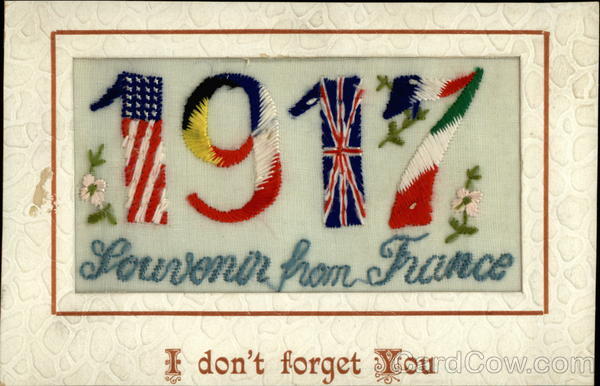
Embroidered postcards during the war mainly featured flowers, flags and medals with the odd animal thrown in for luck.


Occasionally quite funky, symbolic text appears:

Soldiers would not have been able to make these, even with time on their hands waiting in trenches or hospitals.

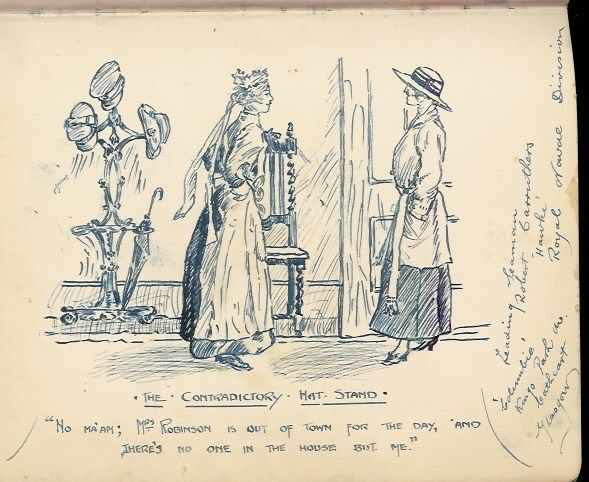
But there's an album online of images scanned from a book kept by one of the women who graduated with Isabella, Celia McNeill. http://s143.photobucket.com/user/quartz-quill/library/WW1?page=1 
It's full of drawings, paintings and poems done by the wounded men she was treating. 


The standard of the painting varies:


as does the literacy level of the men:


But it amazes me that they possessed any of the skills to draw or paint. It challenges my stereotype of men in the war as much as Isabella does with her doctoring.